Hotel art, examined
The problem with hotel art, and what properties are missing.
Most hotel art is bought as filler: unsigned, unattributed, chosen from a catalogue that sells to every property at once. This page sets out why that happens, what it costs, and what a different approach looks like.
Why hotel art usually fails
It is bought by the square metre
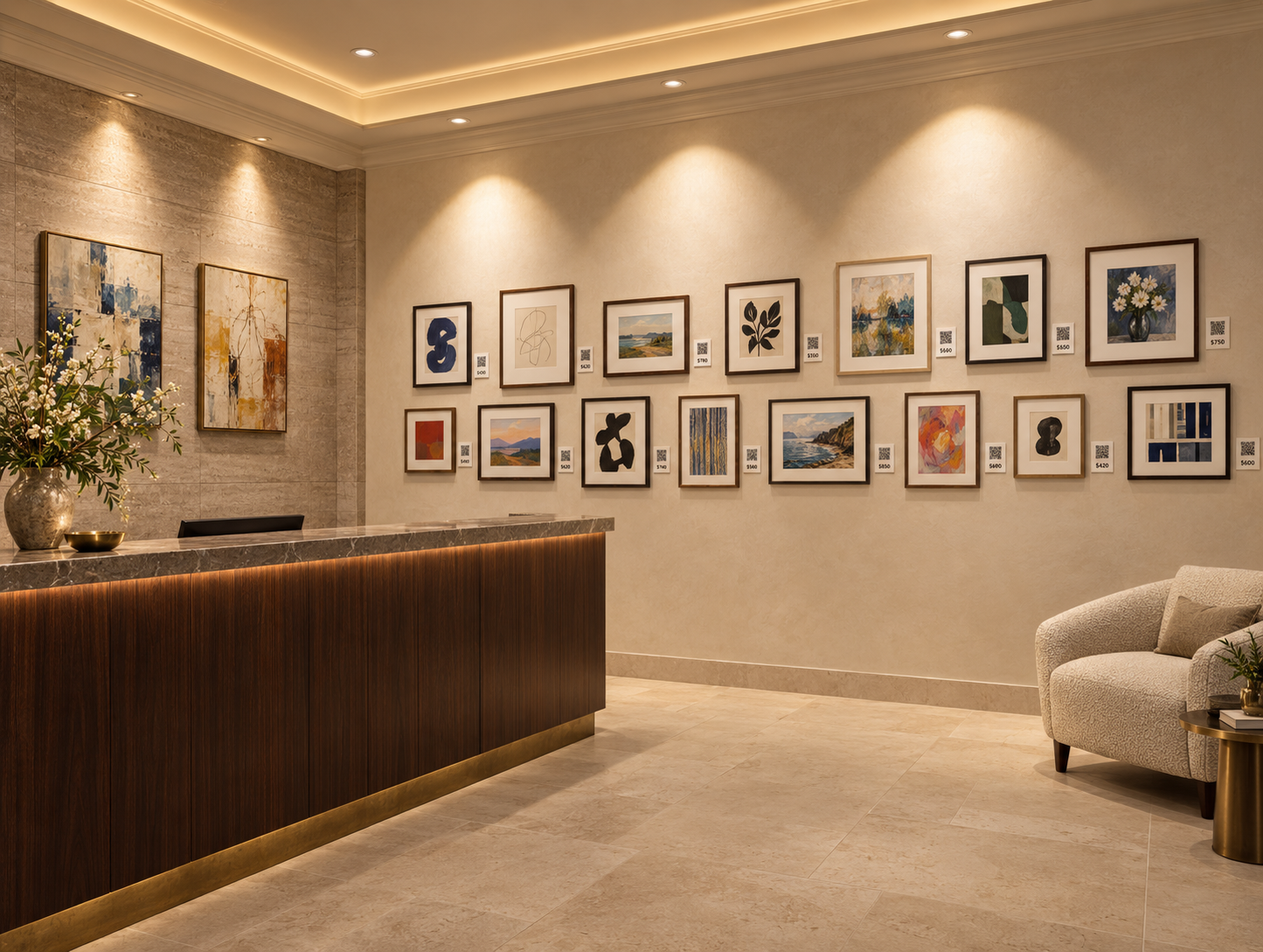
Art packages are priced per wall or per room count, from a supplier catalogue. The buying question is “does this fill the wall”, not “does this say anything about this property”. The result is art that could hang anywhere, which means it says nothing where it hangs.
It is anonymous by design
Stock hospitality art is deliberately unsigned and unattributed, so no single artist has to be cleared, credited, or paid again. Guests notice. An unsigned print reads as decoration, and decoration is not what anyone photographs or talks about.
It repeats across unrelated properties
The same catalogue fills a desert resort and a city boutique hotel. Guests who travel see the same images in different lobbies, which quietly tells them the property is assembled rather than considered.
It contradicts the rest of the build
Properties spend years on architecture, materials, lighting, and furniture, then hang whatever the art package included. The walls are the largest visible surface in most rooms, and they are the least considered purchase in the budget.
It has no life after installation
Nothing is on record: no artist, no edition, no source, no replacement path. When a frame breaks or the property expands, the answer is another square-metre order, and the inconsistency compounds.
What it costs the property
None of this appears on the art invoice, which is why it keeps happening.
No photograph taken
Guests photograph rooms with art that reads as gallery work. Anonymous filler does not end up in anyone's camera roll, so the property loses the least expensive content it could own.
No conversation started
Named work with a plaque and a story gives staff something to point at and guests something to mention. Filler gives neither.
Revenue left on the wall
When a guest wants the piece in their room, there is usually no way to buy it. The interest exists and has nowhere to go.
A relationship that ends at checkout
A guest who bought the work on their wall remembers the property that introduced them to it. Décor produces no such memory.
The missed opportunity
A hotel is one of the few places a person lives with a work of art at full size, framed, lit, and seen every morning. That is context an online thumbnail cannot supply. Guests already stop, look, and ask about the piece in their room. In most properties the answer to that interest is: nothing.
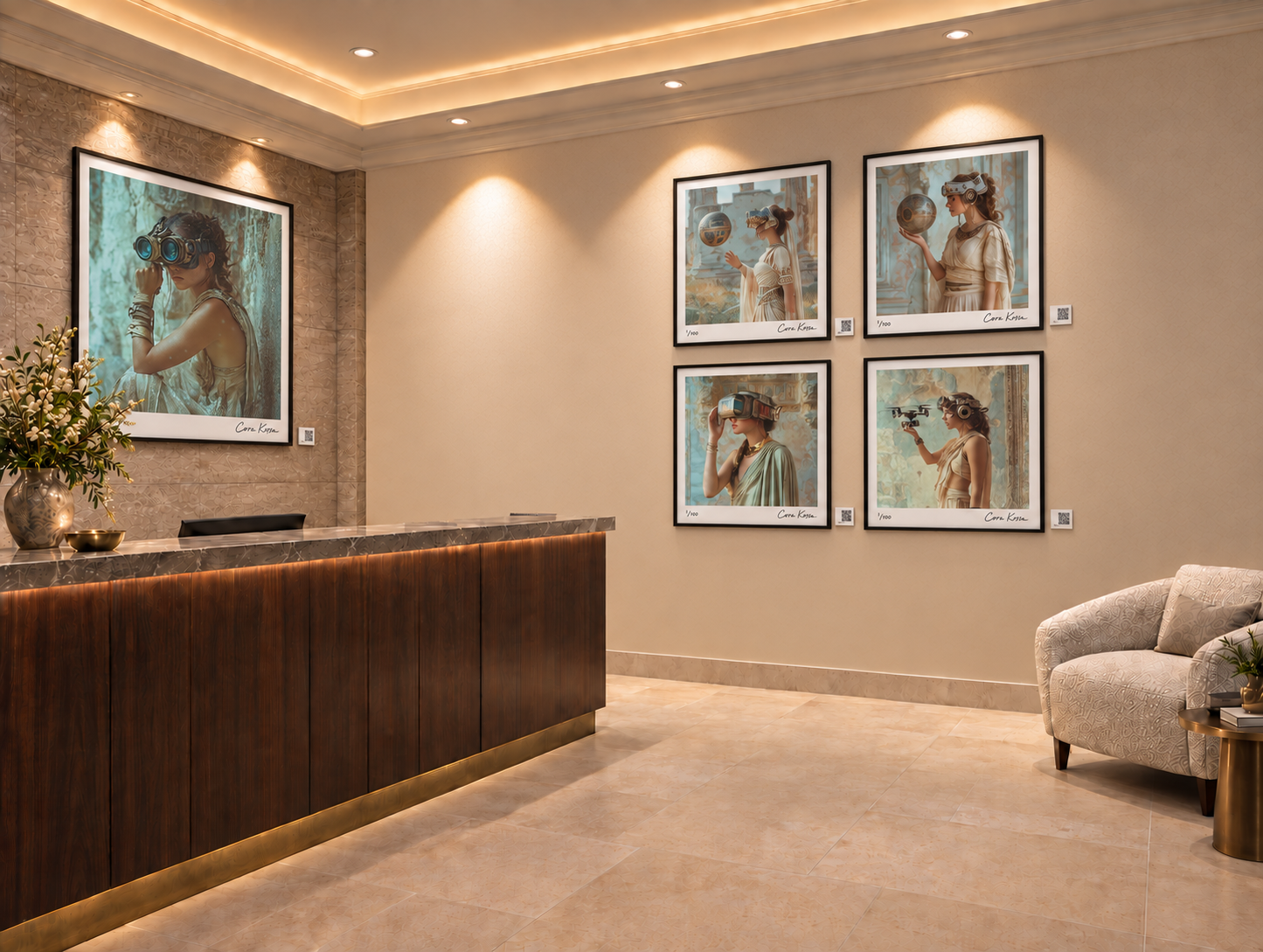
When the art is a signed, numbered edition by a named artist, the interest has a next step. A plaque gives the name. A discreet code lets the guest buy that edition, or others by the same artist, from the room. The property earns a share of what the guest collects, and the guest leaves with a work that recalls their stay.
That is the difference between décor and a collection. Décor fills a wall once. A collection starts a relationship between the guest, the artist, and the property, and the record of what is on the walls makes it repeatable at the next renovation.
Seven questions to ask your art supplier
These apply to any supplier, including us. The answers separate a collection from a package.
1Can you name the artist behind each piece, and does the artist receive payment when we buy?
2Is the work signed and numbered, or open-run stock?
3How many of each image will ever exist, and is that in writing?
4Can other properties buy the identical set, and will ours be distinguishable?
5Does each piece carry a certificate or record we can retain?
6What happens when a frame breaks or we add rooms in two years?
7Can guests buy a piece they like, and does the property share in that?
How the ArtisChroma hospitality programme works
A creative brief built around your property, an approval-ready proposal with room mockups and an itemised quote, production and delivery, and a retained record of every piece for reorders. We work with hotels, restaurants, cafés, and other hospitality spaces. Email us to arrange a meeting and discuss yours.